
From The Editor: Yay! The Wind
(This story originally featured in Wild #198, Summer 2025)
Recently, I had just forded the Snowy River in Kosciuszko NP on my way out for a few days of backcountry skiing—the river’s frigid waters, despite being swollen with snowmelt, had thankfully remained just below testicle depth—when I got chatting with a woman about to ford back across the river. She’d only just braved the icy crossing in my direction less than half an hour earlier, so I asked why she was heading back so soon. The wind, she told me. I gathered it freaked her out.
Granted, it was a blustery day. But it was nowhere near as blustery as it would be three days later, when I could barely stay upright while walking across ridgelines or while transitioning for a ski descent off Carruthers. And that, in turn, was nowhere near as blustery as when I took my mate Jase out a few years back for his first backcountry trip to camp just beneath Mt Northcote; on that occasion, the winds, confirmed by the BOM station at nearby Thredbo, gusted at over 140km/h. At one point, I was literally picked up off my feet and thrown off the summit of Northcote.
But I love the wind. Really. Even when it’s blasting. Especially when it’s blasting. It’s something—in the wake of that conversation I held by the banks of the Snowy—I reflected on for the days I was out on that ski trip. I was out solo, btw, so I had ample time to let thoughts rattle around in my head. One of my realisations was how important the wind is to so many adventures—yeah, I know, that’s not truly groundbreaking—but the bigger realisation was just how little we tend to actually stop and give wind its proper consideration. We often—when regaling our friends with stories from our adventures—talk about the scenery encountered on a trip; how often do we stop to talk about the wind, unless it was roaring? Or unless we want to remark on the wind’s absence, and the stillness of the air? No, we tell about stunning peaks or mirrored lakes. We tell them about the steepness of the climbs, or the toughness of the terrain. But do we mention the breeze that gently kissed our sweat-moistened skin on that hot day, a cooling breeze so delicious the pleasure it induced was palpable?
Unlike scenery, however, we can’t see the wind. Wind is caused simply by differential heating of the planet; air pressure rises in one part and falls in another, causing air to rush about to try and equalise at scale. But this movement of air has such an impact on our lives that we need a slew of ways to describe it. And while we maybe don’t have for wind quite the forty words for snow Inuit people reputedly do, there are a lot. There are blasts, breezes, cyclones, gales, gusts, wafts and zephyrs. There are headwinds. Tailwinds. Anabatic and katabatic winds. On-shorers and off-shorers. Nor’easters and sou’westers. Fremantle Doctors and Southerly Busters. Whirlwinds and willy willies and twisters. Puffs of wind can come and go. Days can be blustery or blowy; gales can buffet us or batter us.
Outdoors, of course, the effects of wind are all amplified. This is a good thing. For me at least; I know others, many others, especially in alpine environments, find strong winds unnerving. But I love them. Always have. Even before I began adventuring.
Perhaps this became apparent in my early years of high school. I hated English as a subject back then (an irony given I have for decades made a living from words). In particular, I hated Shakespeare. But there was one line that stuck with me. It was from King Lear, Act III, Scene II, when King Lear himself was mentally cracking up:
Blow, winds, and crack your cheeks! Rage! Blow!
King Lear
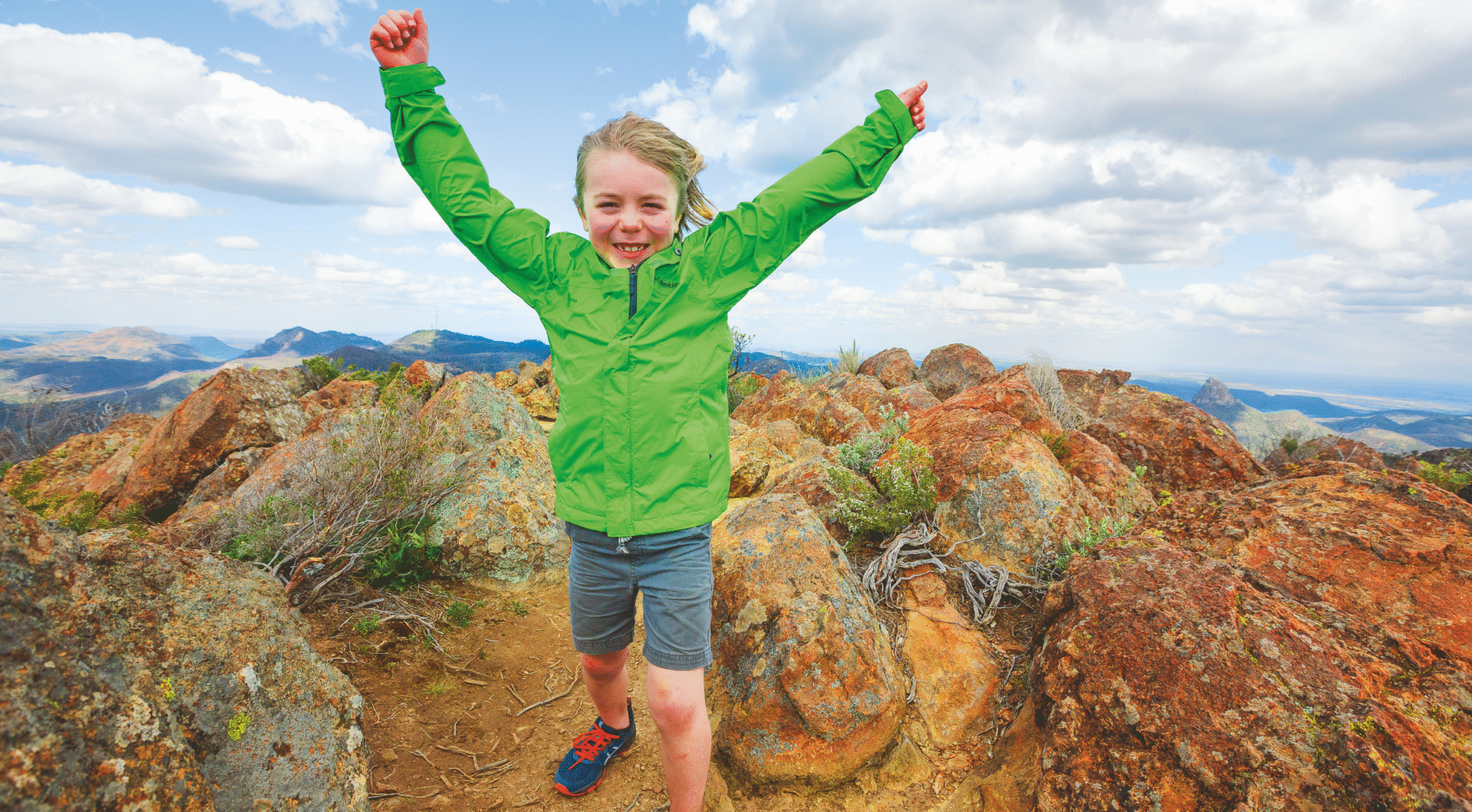
I loved this line at the time, and I still quote it today. One of the people I have quoted it to is my son. He is twelve now, but when he was younger, I wanted to inculcate him with the joys of strong winds, in part so he would never be put off adventuring just because it was blowing. So if the winds were raging or cracking their cheeks, we would head to nearby Bald Hill at Illawarra’s Stanwell Tops, and while everyone else either curled up indoors or stayed huddled in their vehicles, we would run around in circles on the grass, buffeted by blasts strong enough to make our steps falter, and shout, “Yay, the wind!” I believe, of life’s lessons, this is one of the more important ones. Especially if you’re heading for a lifetime of adventure.
JAMES MCCORMACK
If you liked this, you should subscribe to the print mag. Only a fraction of the great stories we run in the mag make it to our website; if you want to read them, head to subscribe.wild.com.au