From the Editor: The Dancing Plague of 1518
(This letter originally featured in Wild #197, Spring 2025)
“Again?” asked my wife Alexis. “You say that every time.”
“No,” I responded, in an effort to save face. “I don’t.”
“Yes, you do.”
But I didn’t bother pushing the point, because I knew she was right. Well, she’s always right. But I kind of have to say that, don’t I? Actually, but wait! Do I? Do I really have to say that? She never reads what I write, ever, so I could—given she’d never know and thus couldn’t refute it—just come out and state that, in my disagreements with her, I’m the one who’s right. 100% of the time. Perhaps more.
On this occasion, though, she was right. I’d just moaned to her, as I do pretty much every issue, that I had no idea what to write for my editor’s letter. Now, my life would be far easier if I did what the vast majority of editors’ letters in Australian magazines do, which is to primarily give a rundown of what’s coming up in the issue. But isn’t that what the contents page is for? Why repeat it in sentence form in an editor’s letter? Boring! So I vowed when I took the helm of the good ship Wild that that would be something I’d never do. And if it does ever happen, you’ll know that I truly have run out of things to say.
This actually might not be such a big deal, because Alexis also recently told me—in response to me throwing out the idea that I should write a book regaling all and sundry with tales of my adventures of cheating death and meeting head hunters and breaking bones and puncturing lungs—that, and I quote, “No one would be interested in what you have to say.” Ouch.
But I digress. Alexis has grown so tired of my moaning about what to write that she has occasionally decided to offer what she regards as ‘assistance’ in overcoming my editor’s-letter writing block—which can last not just days, but weeks and even occasionally months—by giving me a topic to write on. The problem is that she does this as a kind of challenge, by giving me something at best tenuously related to the outdoors or nature, and often not at all. Usually I rise to said challenge, but the one she gave me this time was particularly tough: the Dancing Plague of 1518.
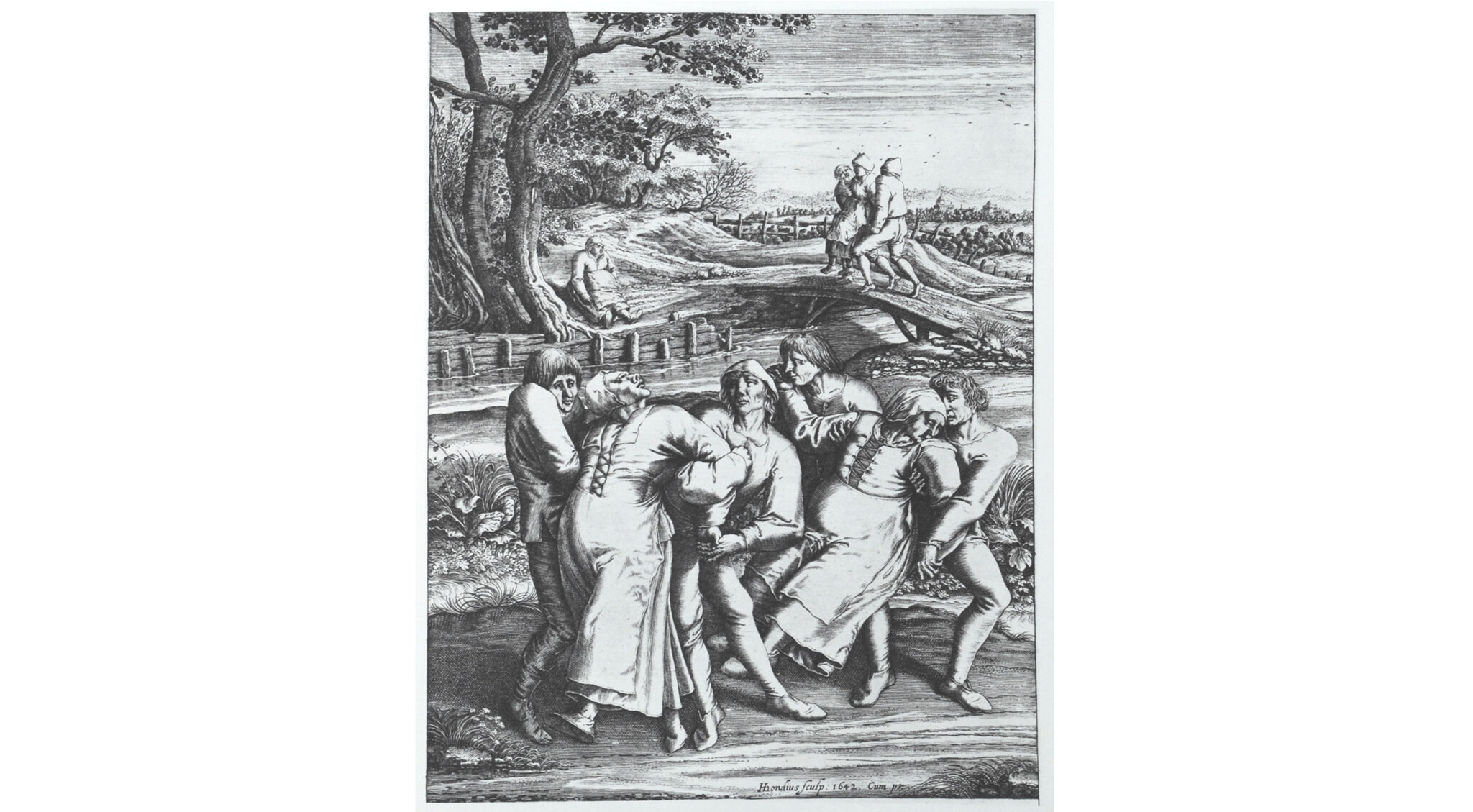
We’d just seen the start of a YouTube vid on the topic. It occurred in Strasbourg, France in—you guessed it—1518, when hundreds of people took to the streets to dance uncontrollably for weeks on end, with the craze spreading like some kind of virus. Dozens, if not hundreds, died. Geez, I thought when I learned about it (and actually, I’ve since discovered it wasn’t the only medieval dancing plague), how would you vaccinate against it nowadays? COVID-vaccine conspiracies would pale in comparison.
Anyway, responding to Alexis’s suggestion, I said, “How does that connect with the outdoors? Or with nature? Gimme something I can work with.” Secretly, though, I warmed to the idea of the challenge, and began ruminating on the idea of connection to the outdoors. As luck would have it, a few days later, I read a story in the Guardian about how human connection to nature has declined 60% in 200 years.
Wondering how you might measure connection to nature in a statistical form that lets you calculate such a precise level of decline, I dug up the original paper the Guardian piece wrote about. Published in the scientific journal Earth, ‘Modelling Nature Connectedness Within Environmental Systems: Human-Nature Relationships from 1800 to 2020 and Beyond’ was written by Professor Miles Richardson. It turned out, however, that the 60% figure mentioned in the Guardian was merely a rough rounding number; the decline in nature connectedness, at least between 1800 and 1990, when it peaked, was actually 60.58%. Here’s how it was calculated:

But equations like this seem to me to be part of the problem, as far removed from genuine nature connectedness as was the Dancing Plague of 1518. Actually, more so. At least the Dancing Plague involved unmediated immersion, just as a genuine connection with nature does.
The greatest benefits of nature—and of the outdoors—are found not when we categorise it, compartmentalise it, model it, or even think about it. Instead, we should, at least on occasion, simply be in it. Go into the bush or the mountains, switch off, and empty your mind. Give yourself over to nature without trying to rationalise it. And if you’re really keen, and if no one is watching, channel those dancers of 1518 and throw in a little jig, just for the hell of it.
If you liked this piece, you should subscribe to the print mag. Only a fraction of the great stories we run in the mag make it to our website; if you want to read them, head to subscribe.wild.com.au