Getting Started: Your First Steps In Mountaineering
Few things sing more of high adventure than mountaineering, but it’s easy to get overwhelmed. Wild Earth Ambassador Oliver Foran offers some simple tips to help you start off.
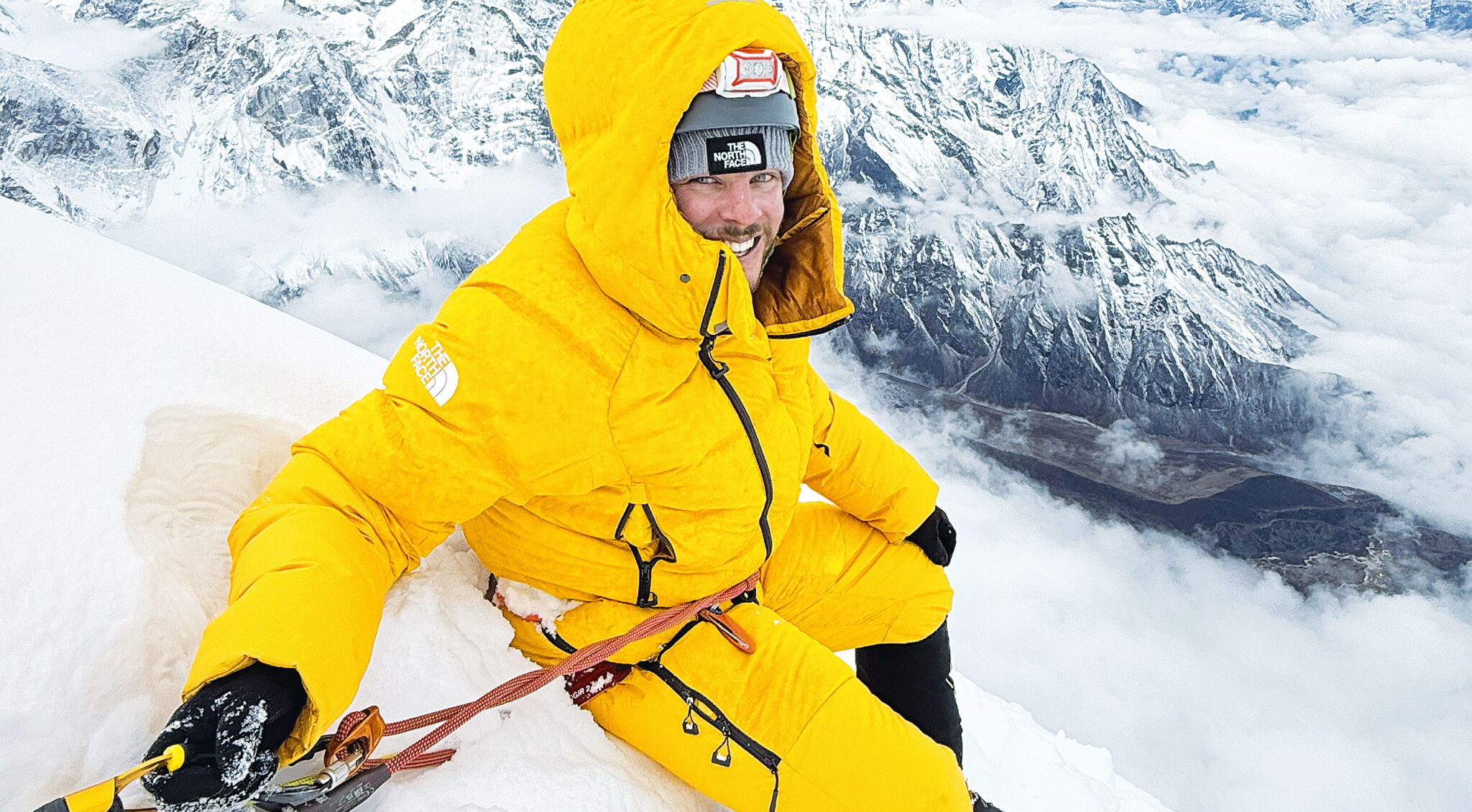
Header photo caption: Oliver just below Ama Dablam’s summit. Credit: Gyans Tamang.
(This piece originally featured in Wild #197, Spring 2025)
Mountaineering has become a major part of my life. Before I was into it, I always thought of it as this untouchable thing that only the gnarliest of climbers and athletes did. I thought of them as the lucky ones. But after falling and stumbling my way into it, I found out that it is actually more accessible than I thought.
But that’s not to say I didn’t learn some simple lessons the hard way. My goal here is to help you cut out a lot of the hardships by giving you some building blocks to safely get your start. Consider these three things before climbing your first mountain.
DON’T RUSH
Here’s a scenario: You have been training for months, even years, for your first climb. You are ready, well prepared and full of energy. You start trekking in to the peak and think, “Jeez, it’s not as hard as I thought it would be.” So you decide to pick up the pace, and then … boom! You’re breathing heavily, and you start feeling the altitude all at once. Now you’re battling with both a racing heart rate and an altitude headache.
This was me on my first Himalayan climb. I’d been trekking in for a week and was raring to go. Do not make this mistake. It’s a well-known piece of advice when climbing mountains that even if you’re feeling good, fit and mentally strong, take it slow. It gives your body time to make the necessary adjustments at altitude. Take it from me. When you rush, things do not always go to plan.
THE IMPORTANCE OF LAYERING
When I climbed Lobuche East Peak in April 2025, we began our summit push from High Camp at 1AM. It was roughly -15°C, and was a beautifully crisp, clear night. I was dressed in a thermal layer, down jacket, hiking pants, and an outer-shell jacket and pants.
There was hardly any wind on the ascent, but once we arrived at the summit in the sun, the wind seriously picked up. We were prepared with our outer shells. On the descent, the sun was directly shining on us and the temperature swung from minus fifteen degrees to ten degrees above. Having proper layering gave me the opportunity to adjust accordingly. Not staying too cold or too hot is key, because the crazy thing about mountaineering is, when you get too hot, you sweat, and when you sweat, you get colder. Correct layering is essential.
“Mountaineering is not about being the strongest or the fastest. It is about being smart, adaptable and prepared.”
ENSURE YOUR BASICS ARE SOLID
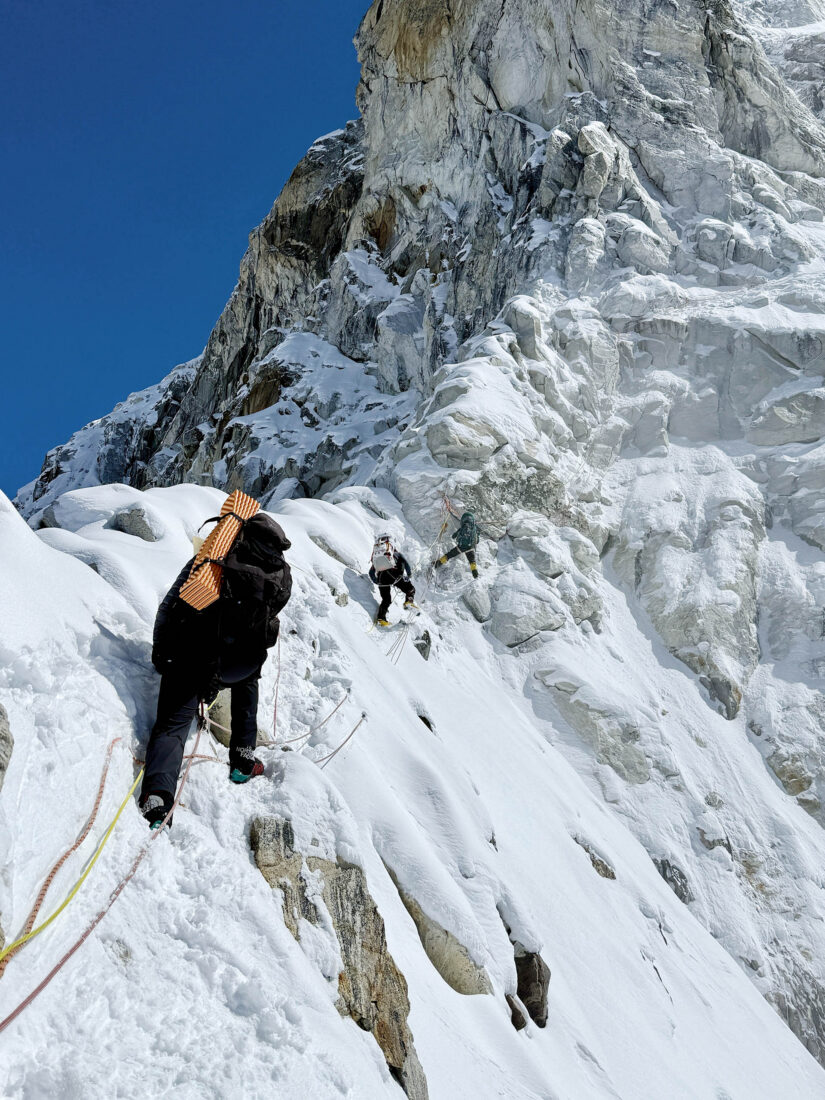
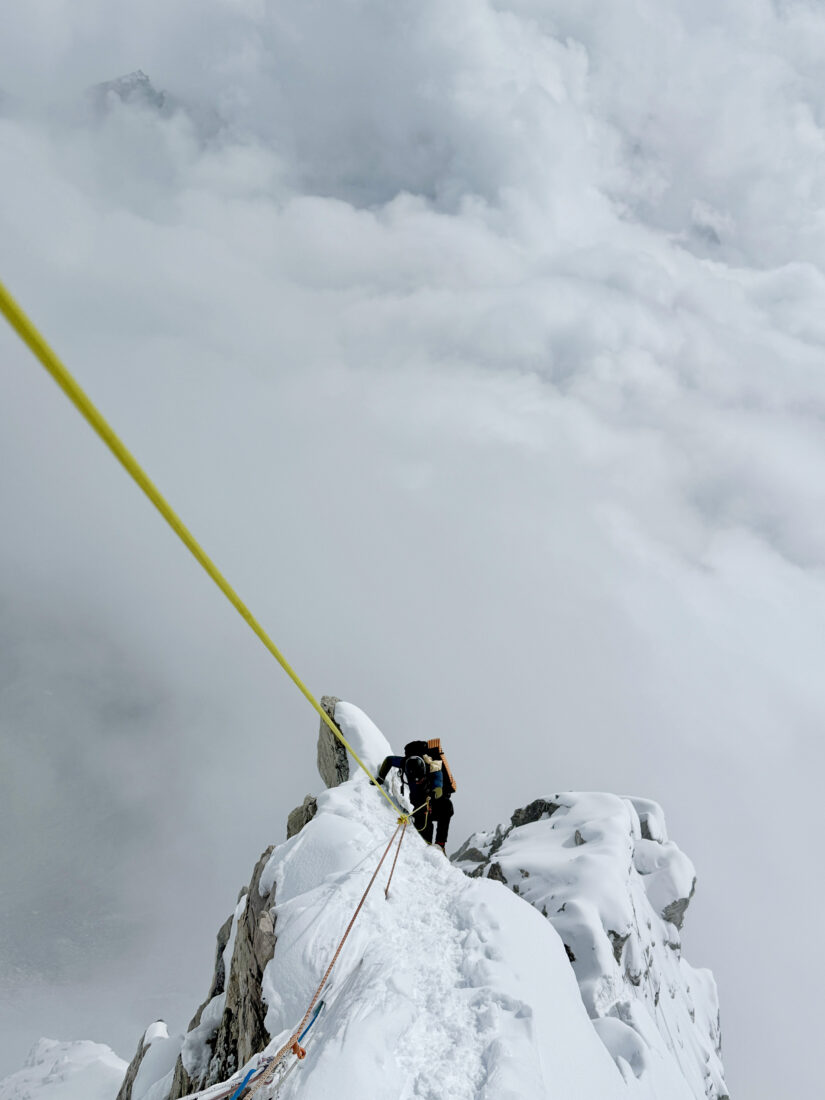
We were climbing Ama Dablam in the heart of the Himalayas for days before reaching—below a towering serac—a snowy little platform which we called Camp 3. The next day, we made our summit push, climbing from 6,400m to the 6,812m summit.
Upon reaching the top, my climbing partner and I were drained. But still ahead of us was the most important part of the climb—getting down safely.
After a good 20-minute stint at the summit—taking in views of Mt Everest, Lhotse and the snow-covered peaks surrounding us—we began our descent. We soon came to a steep rappel section where the rope was stuck under ice. We could not fit our ATC or figure-8 rappel devices on it. Luckily, we’d been practising the use of a French prusik at base camp for the past two weeks, and this was the moment to put it into action. We secured safely to the ice-covered rope, tied a French prusik, and started rappelling down. Basic knowledge like this is fundamental to your success in the mountains. Know your fundamentals and practise them, because when the time comes, you’ll be glad you have.
Mountaineering is not about being the strongest or the fastest. It is about being smart, adaptable and prepared. It is also about learning, sometimes the hard way, so that next time you are a little bit better.
If you’re looking to take your first step into the mountains, remember these lessons, respect the process and enjoy the journey, one careful step at a time.
If you liked this piece, you should subscribe to the print mag. Only a fraction of the great stories we run in the mag make it to our website; if you want to read them, head to subscribe.wild.com.au