Australia's Inland Sea
The last time Australia’s largest lake, Kati Thanda-Lake Eyre, filled completely was back in 1974. Recent rains in the country’s interior has the lake filling again, and while it’s uncertain whether it will fill completely this time, what is certain is that this spectacular event is bringing the country to life.
Words and Photography: James McCormack
(This story originally featured in Wild #197, Spring 2025)
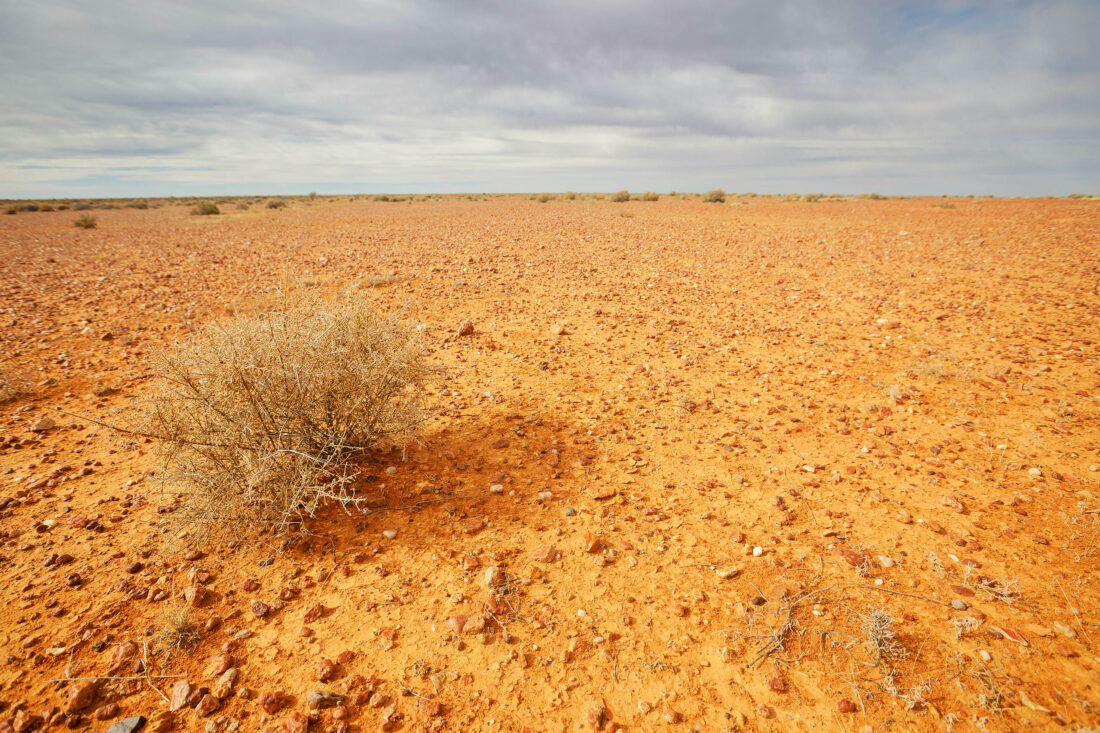
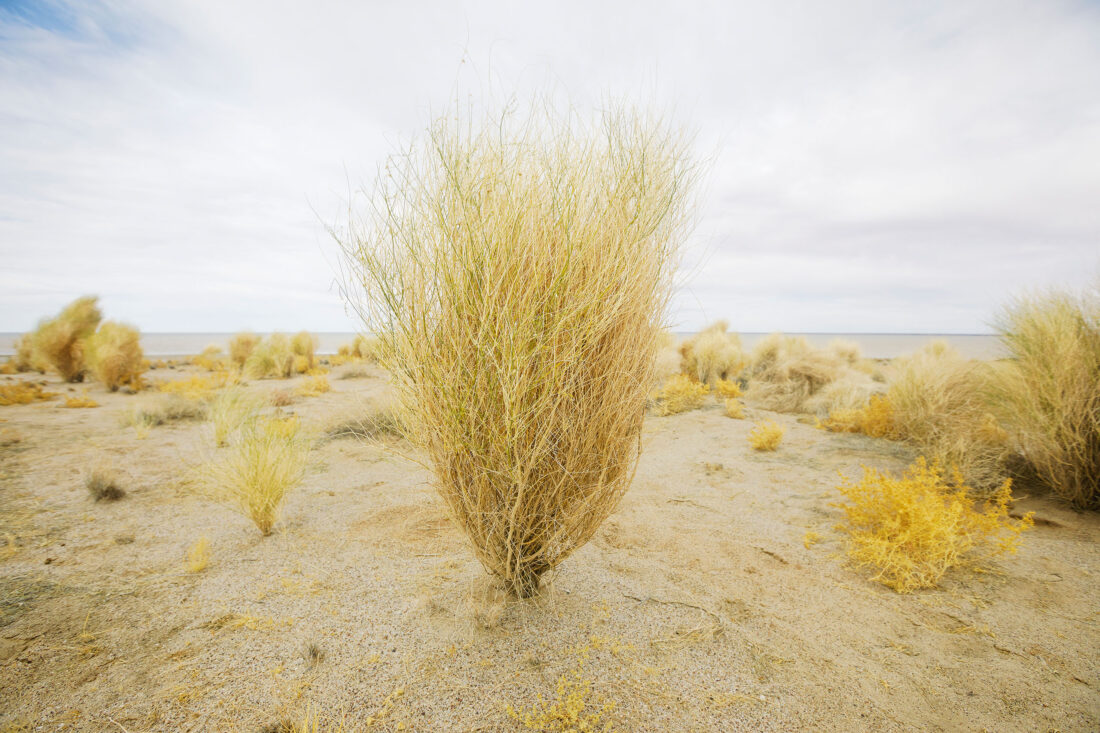
One of the most persistent focuses for exploration in Australia’s early days of colonisation was the search for an inland sea. Surveyors such as George Evans, John Oxley, Charles Sturt and Thomas Mitchell all set forth into the heart of Australia, hoping to find this mythical vast body of water. We now know, of course, this was folly; there is nothing there but harsh desert. Usually. But every now and again, the idea of an inland sea in Australia doesn’t seem quite as far-fetched. Especially to me, when, in July this year, I stood in South Australia at the gently lapping shores of a vast body of water that stretched to the horizon, a body of water that for all the world looked like a sea: Lake Eyre. Or as it has been known for many thousands of years, Kati Thanda.
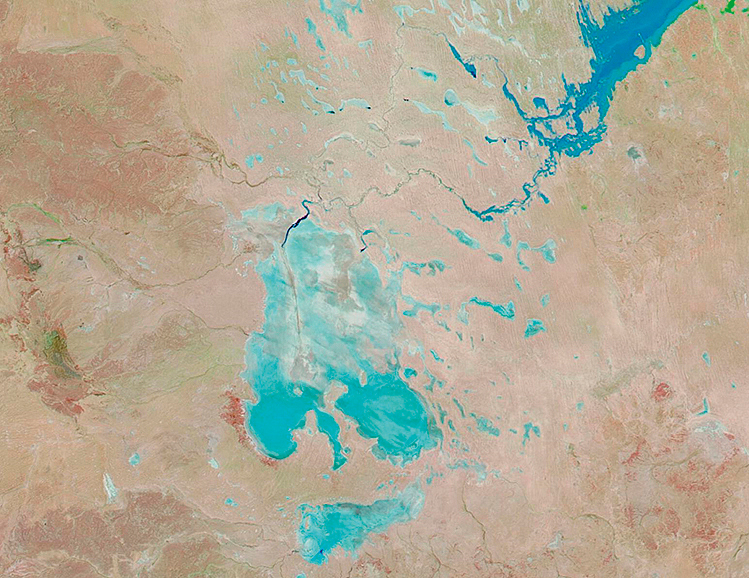
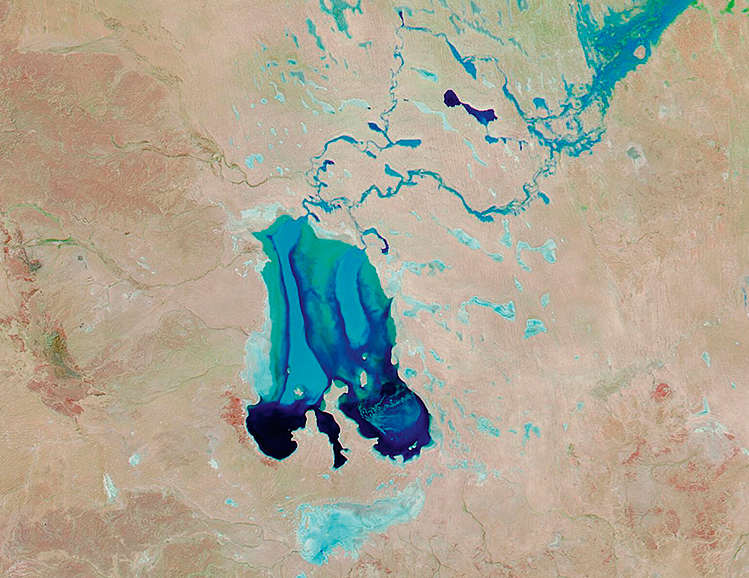
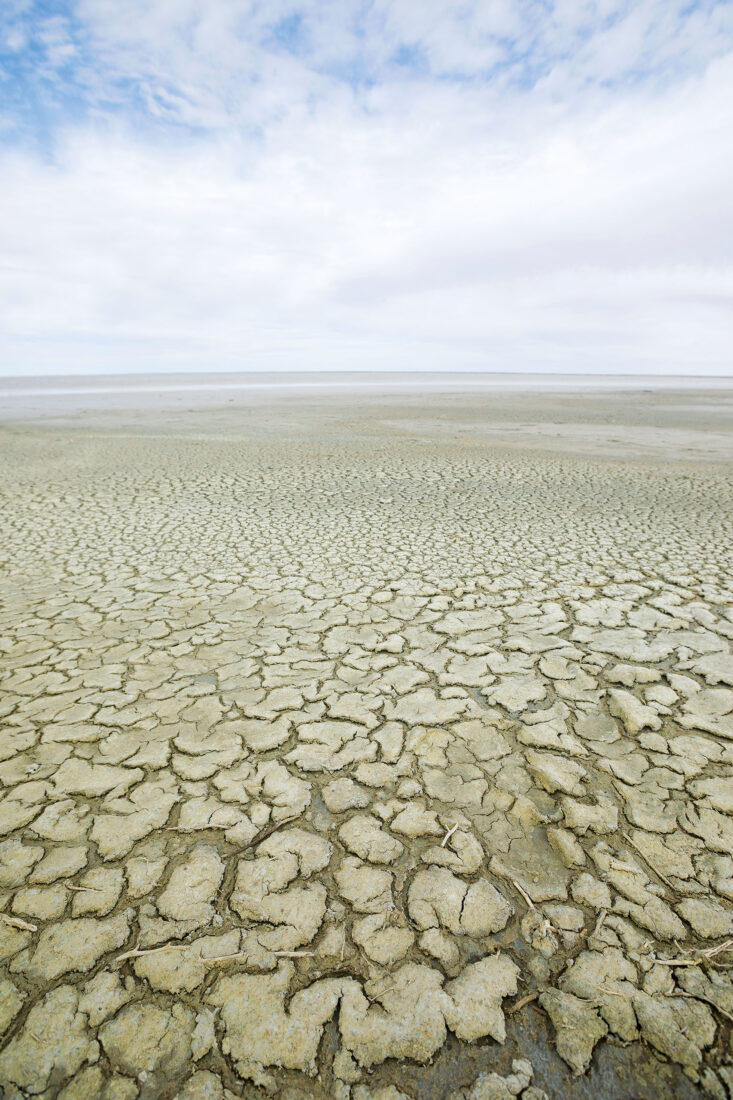
The lake is rarely full. On just three occasions in the last 160 years has Lake Eyre North, along with its smaller sibling Lake Eyre South, filled right up. The last time it happened was 1974. It’s a momentous event. And it’s one that’s well on the way to possibly happening right now. Heavy rains over other parts of Australia, notably in inland Queensland, some of which fell last year, have been flowing for months down the Georgina, Diamantina and Warburton Rivers before emptying into the lake. Roughly one-sixth of the continent drains into the lake, but it’s country that’s so dry, the flows so minimal, and the heat of central Australia so great that, even though the lake is below sea level—in fact, at nearly -16m, it’s the lowest point on the continent—the waters simply evaporate away and never escape to the sea.
Although the lake filling completely is rare, partial filling is more frequent. But even this is far from commonplace; the last time the lake has filled to the extent it’s at now was fifteen years ago. And with more water still flowing in, it could potentially be the largest fill event since ‘74.
And while tourists will no doubt flock to the lake if this occurs, wildlife will arrive in far greater numbers still. I spoke with Rob Brandle, a senior conservation ecologist with the Flinders and Outback region for South Australia’s National Parks and Wildlife Service, and he told me even partial fills can lead to an explosion in wildlife. “Large number of fish and invertebrates breed in the lake,” he said, “and they then support large numbers of waterbirds.”
“What are some of the species?” I asked.
“Endemic Australian birds like the banded stilt and the redneck avocet come up and breed in large numbers in the interior. And Lake Eyre has several islands in the middle of it. Birds, because they’re quite small and vulnerable to predators, come in and use the [islands for protection]. So when the lake’s full, and there’s that large amount of food available, then they will go into one or two breeding episodes. And the other important aspect of that is that birds come from all around Australia. And so it’s a good opportunity for them to mingle their genetics and keep their populations healthy.”
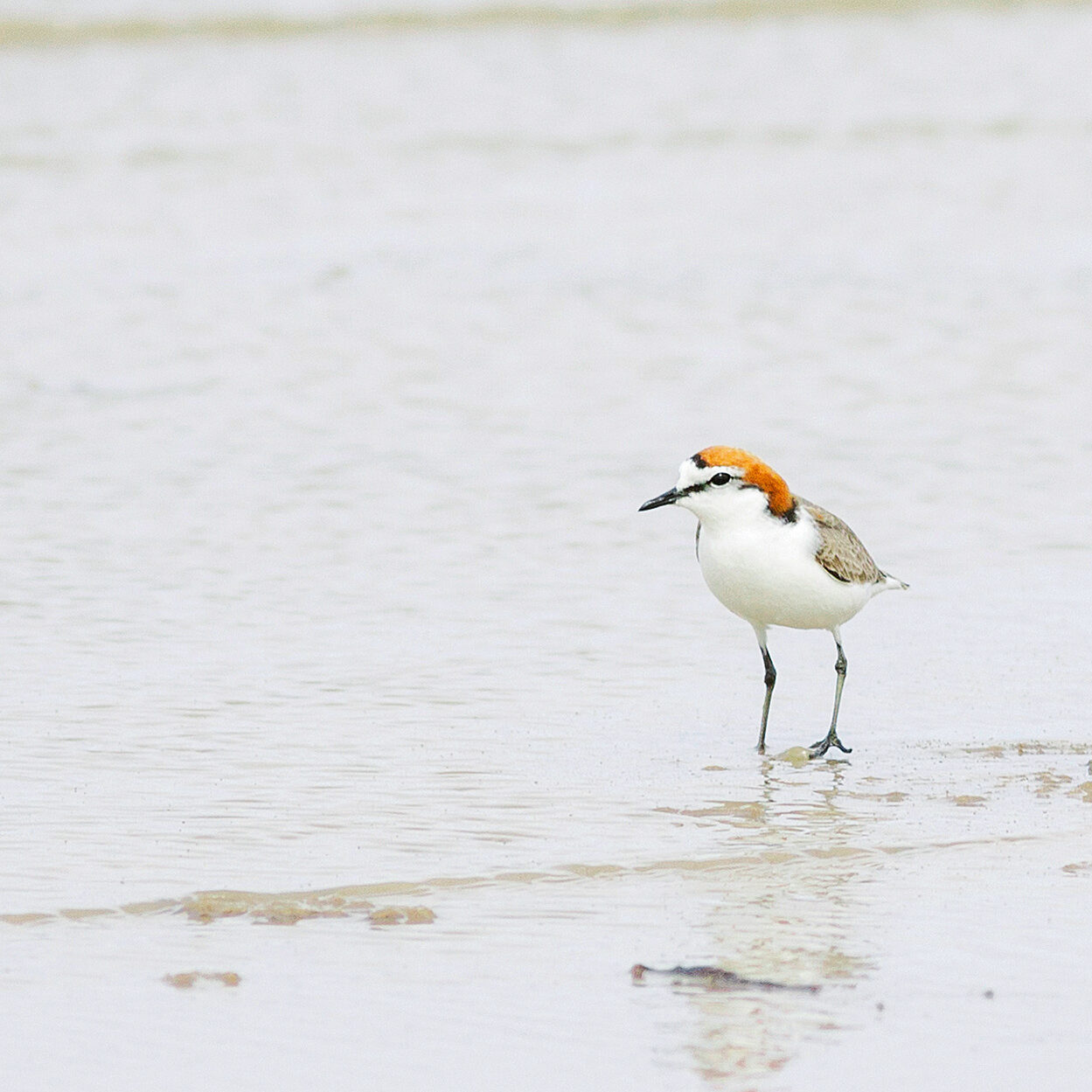
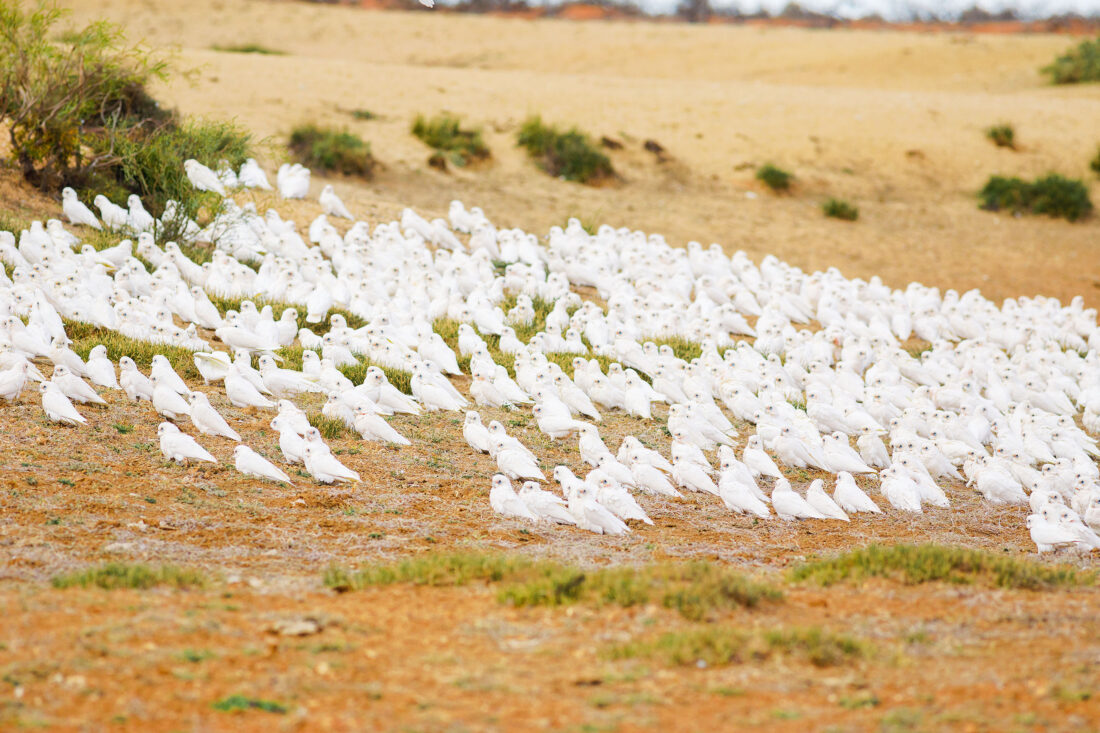
It’s not just banded stilts and avocets that come to the lake. Pelicans, whiskered terns, Caspian terns, grey teals, sea gulls, red-capped plovers, black-fronted dotterels and various species of duck, such as pink-eared ducks, freckled ducks, Australian shoveler ducks and musk ducks fly in. Migratory wading species such as common greenshanks, wood sandpipers, curlew sandpipers, red-knots and red-necked stint come to the waters. Even beyond all those water birds, there are still great flocks of birds in the area in general; driving to the lake shore, I encountered an immense flock of corellas numbering perhaps a thousand.
“But how,” I asked Robert, “do the birds from all around the country even know, ‘Hey, there’s water in Lake Eyre?’”
“I think that’s the question every ecologist gets asked,” he replied, “and we never have an answer for it. But if you look at pelicans, they’re often really high up in the sky. You don’t actually have to fly all the way to somewhere to see that there’s water with the lake being so large. It’ll reflect light from a long way away. And so one of the theories is that there are birds scouting around, and they come back and tell the rest.” He added that there may be something about the atmospherics that gives birds a tweak to actually go and check out areas. Still, he reiterated, “nobody’s come up with a satisfactory answer yet.”
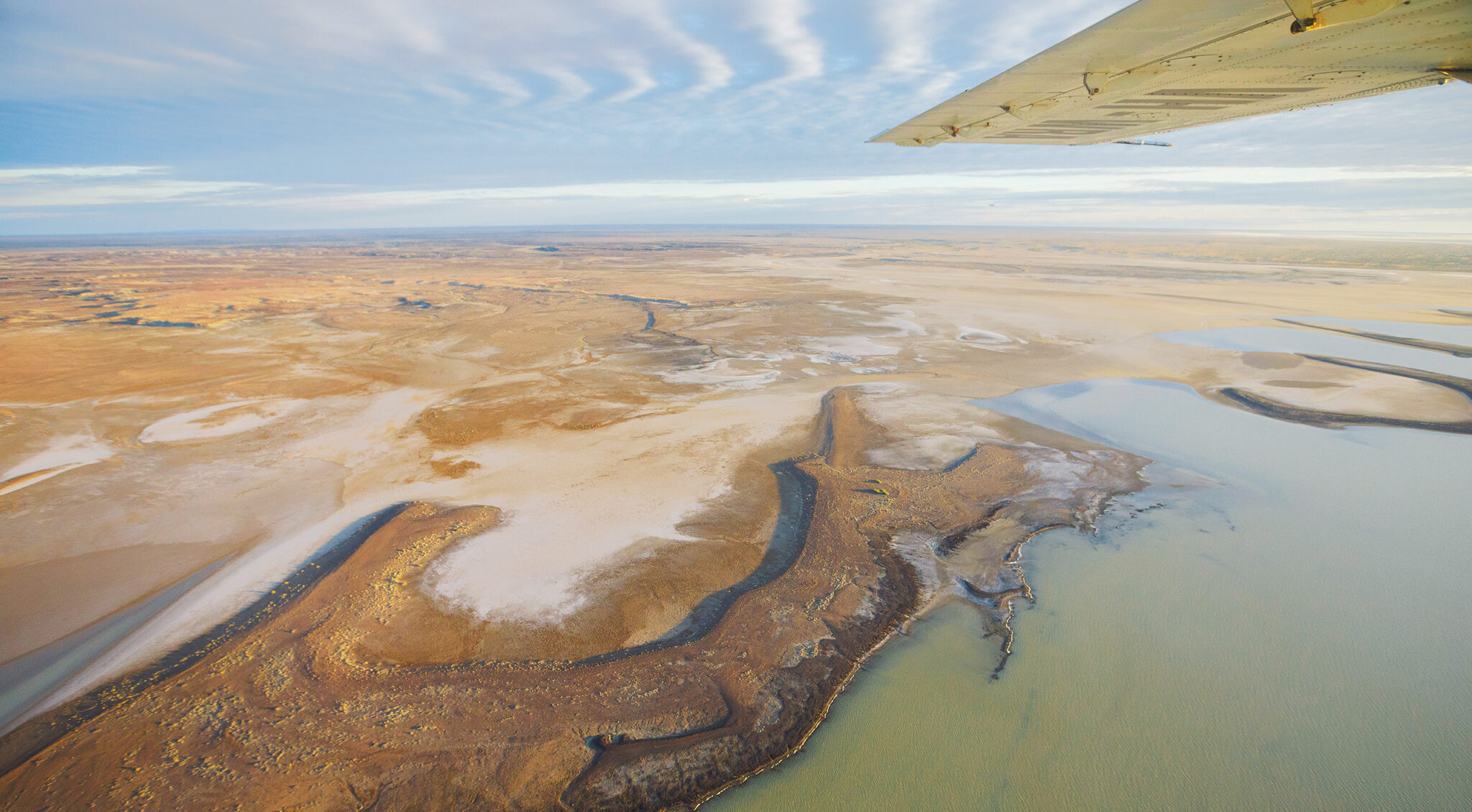
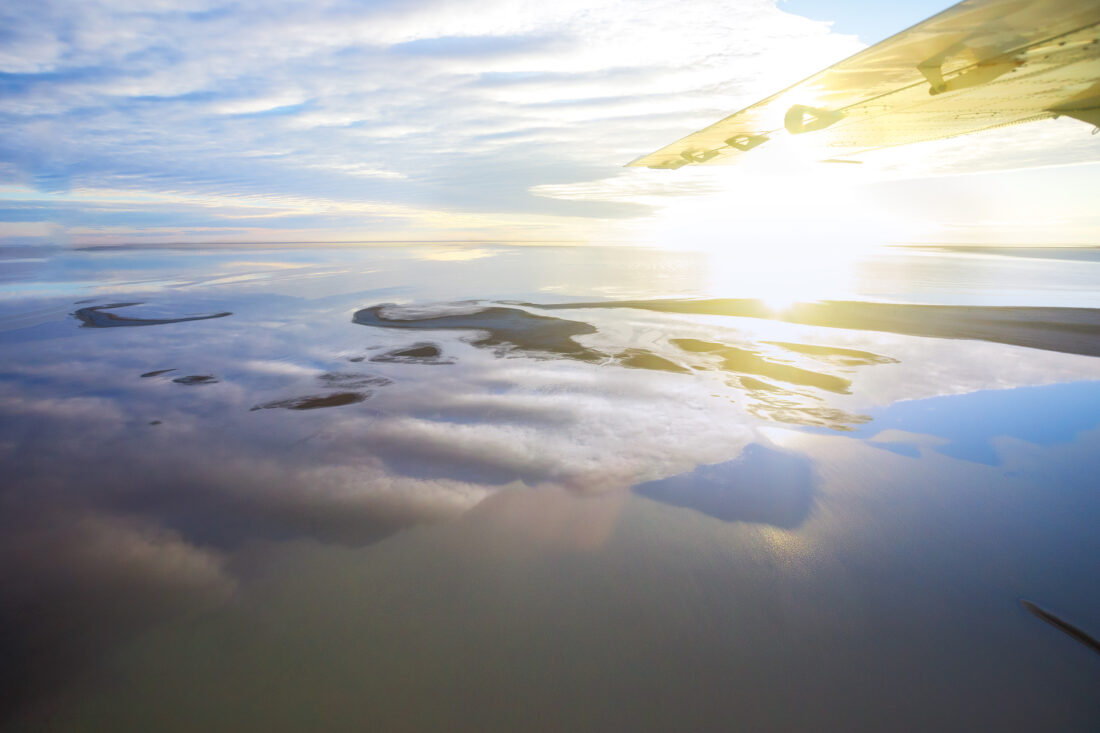
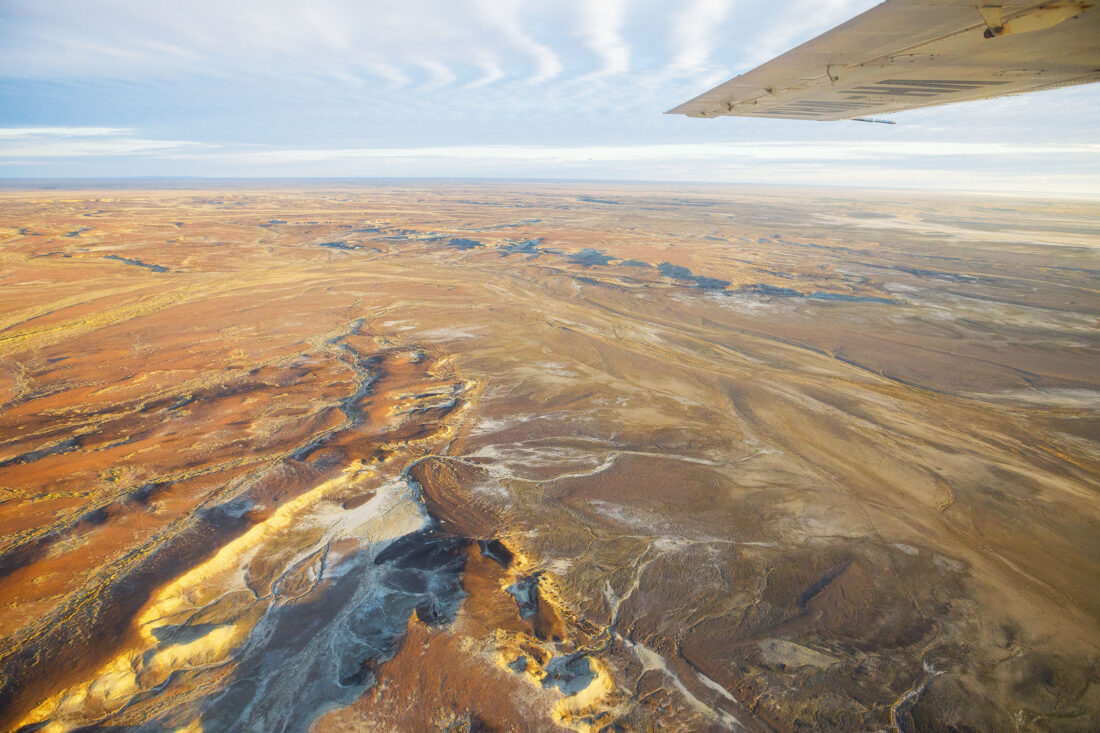
When Rob mentioned the lake being visible from far away—especially as a result of reflected light—it took me back to flying over the lake a few days prior to our conversation. We’d not long taken off from the airstrip at William Creek, a dusty settlement a few hours’ drive east of Coober Pedy that’s centred around one of Australia’s truly great character-filled bush pubs. It was just on sunrise, and the immense brown, ochre and sage flats stretched to the distant horizon. There was not a single hill to break up the desert flats; there were, however, dry watercourses—some flanked by trees and shrubberies—that coursed and braided through the land like veins and capillaries.
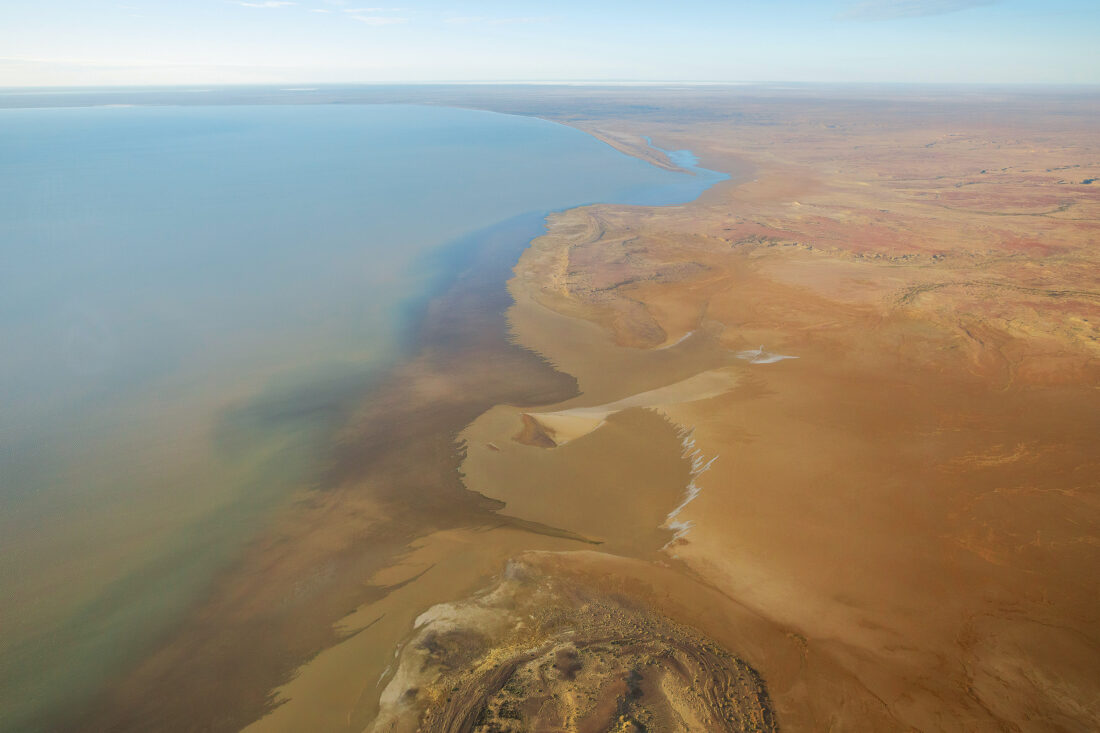
It’s roughly fifty kilometres from William Creek to the lake, but it wasn’t that long after take-off that we could see sun-kissed Kati Thanda shimmering in the distance. I could understand how birds from far away could realise the lake was filling. Soon, flying over the water itself, I could see the many islands dotting the lake. Rob was right; for breeding birds, they would provide perfect protection from predators.
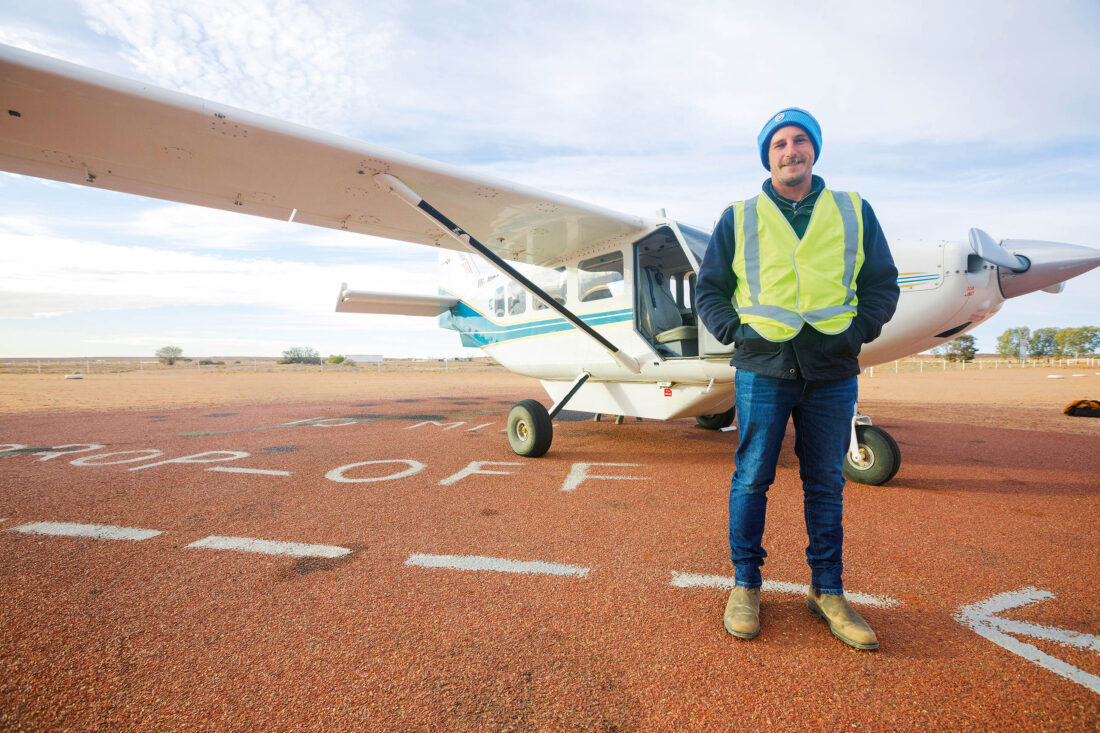
As we flew over the lake, pilot Jaiden Carter supplied us with details. When full, he told us, the lake measures 144km north to south; east to west, it’s 77. The lake, if it’s properly filled, can reach a depth of six metres. When we flew over it, in late July, it was at a depth of 2.5m. In terms of surface coverage (although not volume), he told us the lake was roughly 60% full.
The waters of Cooper Creek had not, at this point, reached the lake, though they have by the time I write this. Cooper Creek is a story in itself. It runs for 1,500km, by far the world’s longest creek, and likely one of its flattest and slowest flowing too. Most years, the creek simply fizzles out; if water flows down it, it evaporates before it reaches its potential ultimate destination of Lake Eyre. And if a raindrop that fell in the creek’s upper catchment does actually reach Lake Eyre, it will have taken nearly a year to arrive there.
But while water from Cooper Creek had not yet entered the lake when I flew over in late July, four months earlier back in mid-March, water had begun flowing in from the Warburton River. It entered from close to the northernmost point of Lake Eyre North, making its way—as gravity dictates—to the lake’s lowest point: Belt Bay, near the lake’s southern end. It flowed through what’s known as the Warburton Groove, a metre-deep channel one hundred metres wide that flows, Jaiden told us, for roughly 140km, right down the length of the lake.
“With the sun peeking over the horizon, with its brilliant light sneaking through a gap in the clouds and causing the lake to flash, it was, in short, spectacular”
Even with the lake’s waters now backed up over the Warburton Groove and smothering it, we could still see the groove from the air; against shallower sections of the lake, its deeper waters stood dark and smooth and glassy. Clouds mirrored off the groove, whereas ripples elsewhere swallowed them up. With the sun now just peeking over the horizon, with its brilliant light sneaking through a gap in the clouds and causing the lake to flash, with the ochre lands surrounding the lake standing in contrast to the waters, with the veined salt-rimmed dry channels feathering away from the shores, it was, in short, spectacular.
In months to come though, it’s likely the lake will become even more spectacular still. As the lake fills, its water can turn from brown to blue, as the sediment in the freshly entered water slowly sinks to the bottom. That’s not the only change that occurs to the water. It becomes more saline. The lake, when dry, is a huge salt bed, and that salt mixes in with the fresh water entering the lake. Rob Brandle told me that the lake goes “from being reasonably fresh at the outset to becoming hyper saline as the water evaporates out of it.” It becomes far saltier than sea water. Eventually, Rob told me, as a result of evaporation it dries up completely, and you’re left with pure salt.
I know many of the birds who come to the lake are here for the fish. Bony bream, Lake Eyre hardyhead, and yellowbelly are the most common, according to Rob. But given these fish must be freshwater fish that only enter the lake as the waters flow in, how, I wonder, do they survive with the salinity. Well, many will die, but in the process they can provide a large amount of food for birds like the pelicans. But some also, Rob told me, will head back upstream to spawn.
The birds usually wait though for the food resources to build up before they congregate on mass here to breed. Those resources include not just fish, but invertebrates—rotifers, copepods, cladocerans (water fleas), ostracods (seed shrimps), and salt lake louse. Most notably, Rob told me, there are the brine shrimp. “They’re the one that everyone thinks about,” he said.
Being brine shrimp, I presumed they like it salty, and wouldn’t live upstream in fresh waters above the lake. “So where do they come from?” I asked Rob.
“They’re actually really cool little critters,” he replied, “because they can just survive in the lakebed as dried up animals. They’re what’s called aestivating.” I later looked up the process; it’s a period of prolonged torpor or dormancy. In the case of the brine shrimp in Lake Eyre, they display no life signs when dried up, but then—kind of like a freeze-dried meal—you just add water, and they come back to life.
Rob continued: “They also have a very durable egg. The egg will survive but will be completely dry. And somehow, the water is enough to spark the chemical reactions that maintain life. It’s pretty amazing. And it provides endless resources for birds, so [much] that they can’t breed fast enough to take advantage of them.”
The life cycle of the brine shrimp may not quite be a perfect analogy for Kati Thanda/Lake Eyre, but it’s not a bad one either. It’s not perfect because the lake never fully goes into the same state of aestivation, or the complete torpor, that the brine shrimp does. But like the brine shrimp, once water is added to Kati Thanda, everything changes. And right now, with the waters flooding into the lake, the country is exploding into life.
CONTRIBUTOR: James McCormack is the Editor of Wild Magazine
If you liked this piece, you should subscribe to the print mag. Only a fraction of the great stories we run in the mag make it to our website; if you want to read them, head to subscribe.wild.com.au