
The Wild Files: Walking for Wimps
(This story originally featured in Wild #30, Spring 1988)
ARE YOU TIRED OF BEING considered a first-degree wimp by your walking friends? Indeed, have you any friends left with whom to walk? If complete defeat in the field of bushwalking is staring you in the face—and a meander around the Botanic Gardens is the most you can contemplate with equanimity—this is for you.
A couple of ‘strolls’ were more like hell-on-earth from my point of view. I could find no joy in scrub-bashing up and down near-vertical ridges, wading through freezing blackberry-choked rivers, traversing slimy rock faces and bashing down scree slopes for hours on end. However, in the depths of my being, I did remember that I truly liked bushwalking, so when I received an unexpected offer to do the Overland Track in Tasmania, I was tempted. I fell on numerous occasions, but in the process I actually started enjoying myself. For the benefit of my fellow-wimps (for such I remain), here are some suggestions to encourage you to have another go.
Before the Walk
Make a realistic assessment of your own capabilities and communicate it clearly to your fellow walkers. Try to find a walk which doesn’t sound like a recipe for disaster; if you loathe scrub bashing, stipulate a track walk or a beach walk, or something above the tree line.
If any of your previous miseries were attributable to unsatisfactory equipment or clothing, borrow or buy better. Listen to the advice of more experienced friends, but don’t discount the value of your own experience.
Be careful who you take—good friends who are enthusiastic walkers aren’t necessarily the best choice. If possible, avoid the companions of previous debacles (only hypothermia or a broken limb justify the use of the term ‘epic’ apparently). Naturally, at least some of the party should be experienced walkers but the very experienced, super-energetic sorts are probably best avoided.ial (literally ‘up’) by your local satellite. Telecom expects that the new satellite technology will be introduced later this decade.
During the Walk
Remember that being slow is not a crime, but whinging is. If you find yourself stumbling with tiredness then stop and have a break. Five minutes, a muesli bar or scroggin and a little water will do wonders for body, mind and spirit. Some people need this type of break more often than others; you need to recognize your own pattern.
If you have a tendency to fall into or over everything, make light of it (before your friends do), grit your teeth and throw caution to the winds. Going straight through streams or mud uses a lot less nervous energy than trying to keep dry and falling in anyway. If your tendency is to fall off things, you should avoid mountains and exposed rock.
Unless it’s a matter of life or death, don’t let anyone carry your gear, pitch your tent or do your share of the cooking and other chores. However kindly they may insist, the end result is a complete loss of self-respect. Take time out and then pitch in.
After the Walk
If it was a success:
Build on the good experience by doing some more walking with the same people.
Plan another walk of similar length and difficulty in the not-too-distant future.
Avoid over-estimating your abilities or you may find yourself back where you started.
If it was another debacle:
Try and assess why, what you can do about it and don’t over-react; after one memorable disaster I took up weight training, wrecked my back and was barely mobile for months.
Try to take the commiserations of your friends with good grace and humour.
Try a few cushy day-walks or week-end walks to regain your confidence; maybe start at the ‘easy family day-walk’ category and work up—if a four-year-old can do it, so can you.
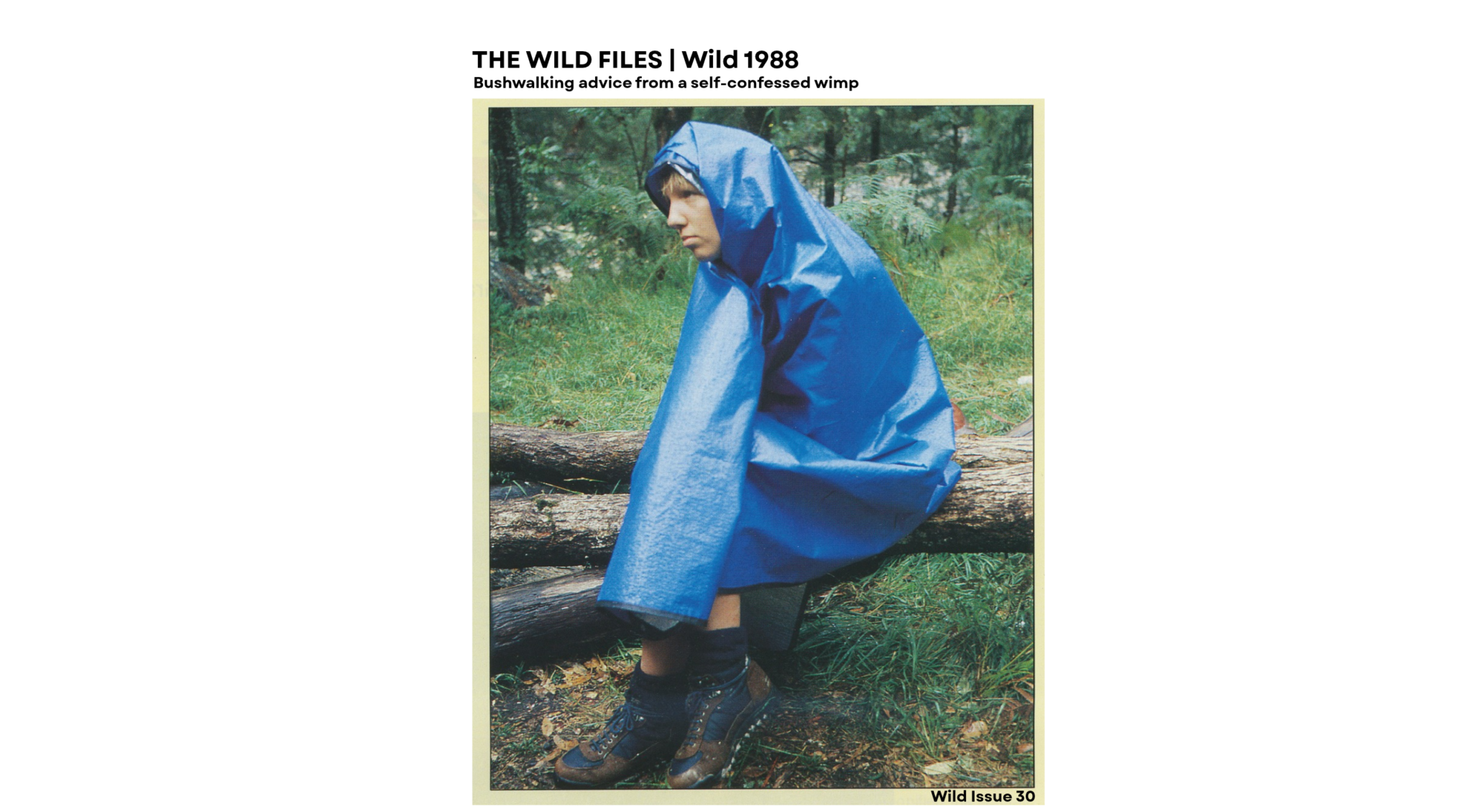
Everyone has something to contribute on a good walk, though they may be inept in the more obvious departments. People with a knowledge of local history, flora and fauna, musicians and story-tellers, bush cooks, willing gatherers of wood and water, and carriers of unexpected edible delights will always be appreciated, so cultivate the skills you do have. If all else fails, remember that cheerfulness covers a multitude of miseries.
Original author biography
Anne Neale is an architectural historian at Melbourne University. Born in England and raised in Tasmania, she writes that a recent return to the environment of her youth resulted in a new enthusiasm for the bush (if not button grass) and bushwalking.
If you liked this, you should subscribe to the print mag. Only a fraction of the great stories we run in the mag make it to our website; if you want to read them, head to subscribe.wild.com.au