Getting Started: Getting Into Packrafting
Wild places can be seen in a number of ways. But, says Wild Earth Ambassador Hamish Lockett, slowly drifting down pine-lined rivers or charging through raging ravines is hard to beat. Here are Hamish’s tips to help you start off.
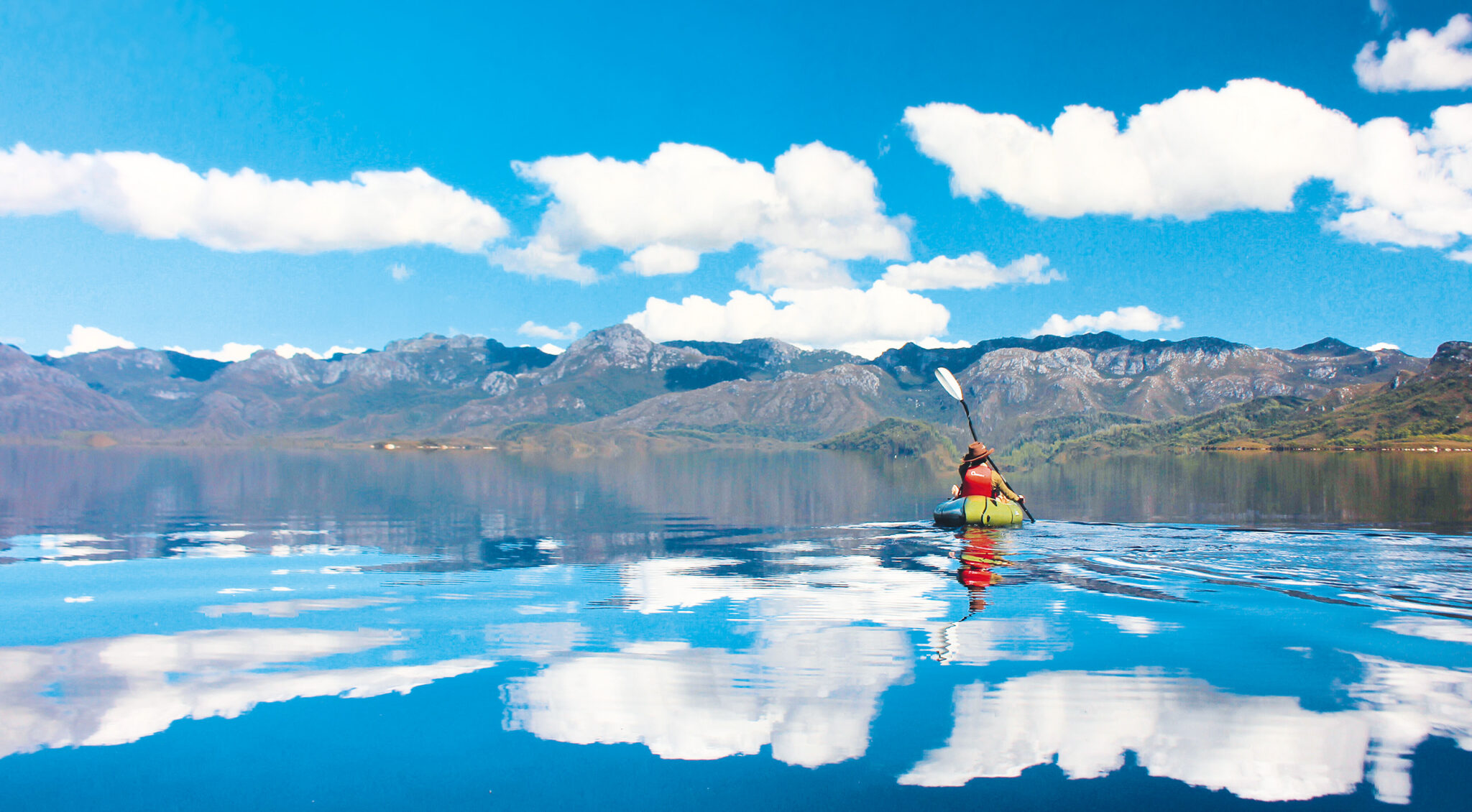
Header photo caption: Packrafting in Frenchmans Cap NP. Credit: Hamish Lockett
(This piece originally featured in Wild #198, Summer 2025)
Wild places can be seen in a number of ways. But, says Wild Earth Ambassador Hamish Lockett, slowly drifting down pine-lined rivers or charging through raging ravines is hard to beat, especially when it’s in a raft that fits in your backpack. Here are Hamish’s tips to help you start off.
I’ve always craved the feeling of remote places. For me, diving into the world of packrafting was a way for me to visit places in a new light. The beauty of these little rafts is how versatile they are. You can be rafting a Grade 4 river, or you can just meander into your favourite lake and go for a paddle at sunset after dinner.
Packrafts are especially great in Tasmania (where I live). There are so many places that are difficult to access, but with a raft that only weighs a few kilograms, you can carry it just about anywhere. I’ve done trips into Frenchmans Cap via my raft, and also blown it up in alpine lakes in remote Tasmania paddling through the turning fagus trees. (Ed: Check out Grant Dixon’s photo essay starting p60 for another example of epic Tassie packrafting.)
Still, at the beginning of my packrafting journey, it was a scary thought to be carrying an enormous pack up steep hills, crashing through rapids and braving the icy cold waters. But what I know now is that it’s something worth experiencing. Here are some tips if you, too, want to find yourself packrafting on the rivers.
ASSEMBLE YOUR SETUP
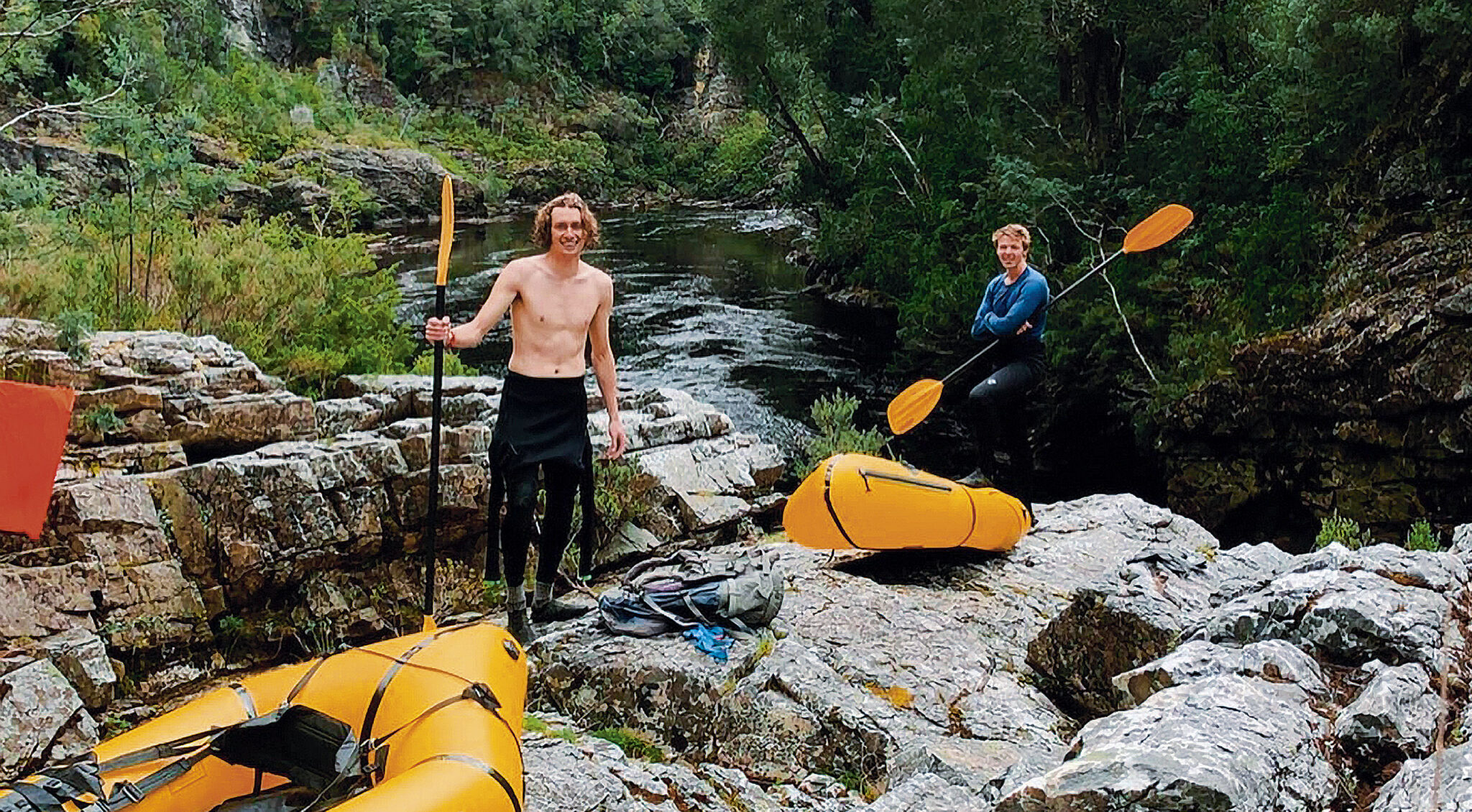
Once you realise you’re keen to get into packrafting, assembling good gear is crucial, especially if you want to do more remote trips. If halfway through a week-long remote trip you get a big puncture or a bunch of wet gear, it can quickly spell disaster—have the right kit. I remember in the early days, I lost a shoe within an hour of a three-day trip. Getting snagged in rivers can quickly strip you of gear; my wetsuit booties were an easy victim, and I had a cold foot in a sock because of it.
Raft-kit essentials:
- Raft (many options depending on trip) and paddle
- Inflation method (bag or pump)
- Dry suit or wetsuit
- Throw bag
- PFD & whistle
- River knife
- Water shoes
- Helmet
Repair-kit essentials:
- Raft repair tape
- Bonding glues
- UV bonding glues for fast action
- Heavy-duty stitching repair kits
- Patches
BUILD YOUR SKILLS
Being on the river is amazing when you’re in control, but it’s the opposite when you’re out of control. When you fall out of your boat in a rapid, they call it a ‘swim’; it’s great at the beach, but not in a washing machine. Rivers, like backcountry snow or big waves, are a whole new world—an environment that works in a unique way and that has to be understood. There are plenty of ways to eliminate or at least prepare for this, and the best way is to learn from others. Join a uni club or Facebook group, or do a packrafting-related course. Be keen to learn from them, and then hone your skills. This will teach you how to paddle, identify hazards, use safety signals, know rapid grades, and so much more.
WEATHER AND WATER
Rivers, as with many outdoor sports’ playgrounds, work best when the conditions are right. Too much water/flow and you’re in a raging torrent. Too little and you’re on a hike. Finding the sweet spot is key, and it varies a lot depending on the river. Like a surf spot—some need high tide, some low, etc—rivers are similar. This can be monitored by checking river-level and flow charts, monitoring rainfall, checking dam releases, and the list goes on. It’s especially important to check this information for multi-day trips, as weather can change dramatically and therefore change your trip. If in remote areas, having offline communication is handy to check in and assess changing conditions.
If you liked this piece, you should subscribe to the print mag. Only a fraction of the great stories we run in the mag make it to our website; if you want to read them, head to subscribe.wild.com.au