Green Pages: Issue #198, Summer 2025
A selection of environmental news briefs from around the country.
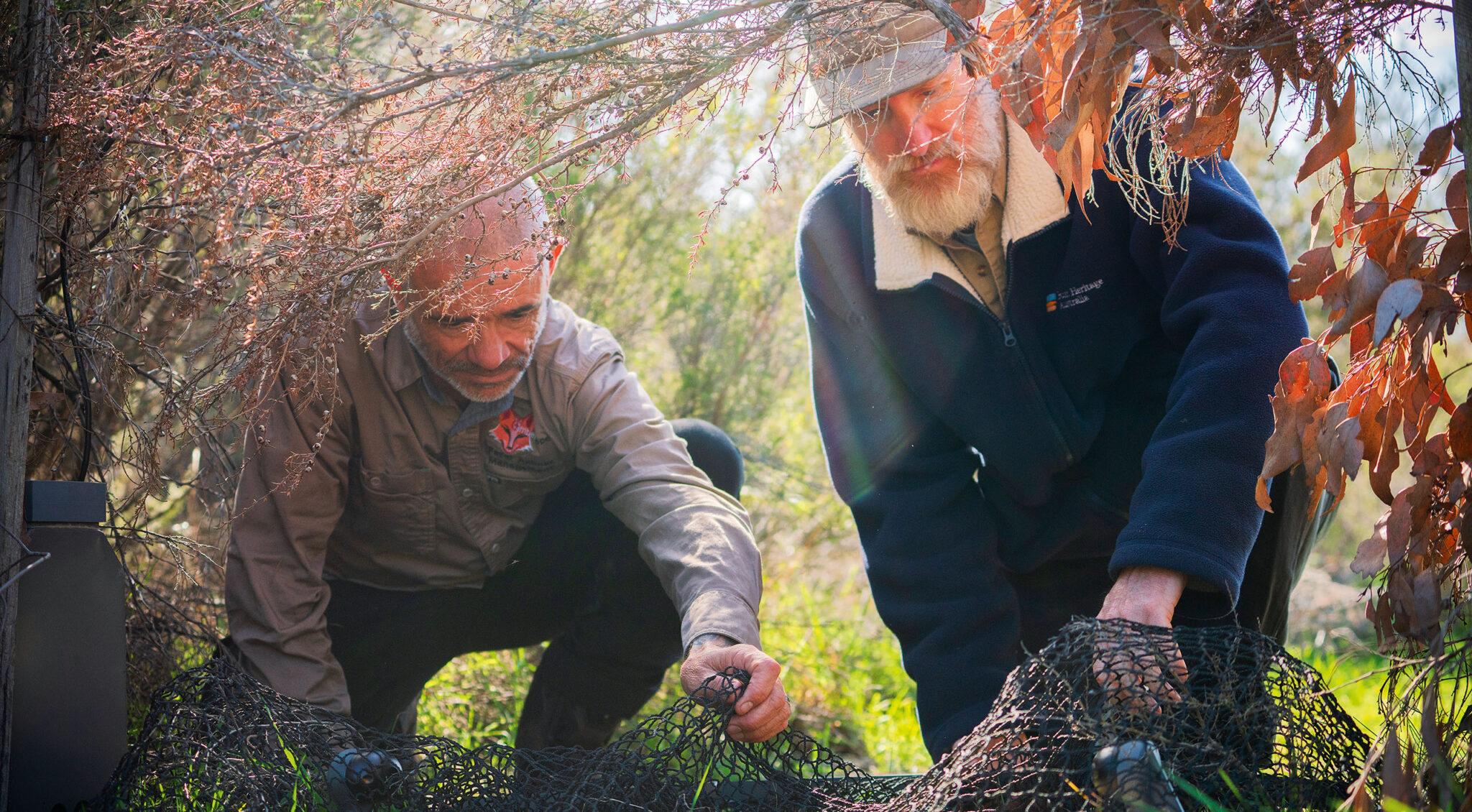
Banner image caption: Bush Heritage’s James Smith and Timberscope’s Rod Brindley examining a new AI-powered trap.
Credit: Grassland Films
(This piece originally featured in Wild #198, Summer 2025)
AI’S HAND-Y SOLUTION
New technologies are assisting in the fight against Australia’s feral cats.
On isolated islands surrounded by clear blue water, high in the fragile alpine country, and among the rolling red sand dunes of Australia’s vast inland deserts, new AI-powered technology is being deployed in the fight to save Australia’s precious wildlife.
It’s a project led by Bush Heritage Australia in partnership with tech provider eVorta and First Nations business Timberscope. The focus: the devastating impacts of feral cats on Australia’s native wildlife and biodiversity. Already, there are promising signs that they could be game-changers.
The Humane Animal Net Device (HAND), developed by Timberscope, is a soft net trap combined with a new high-tech camera that uses AI image recognition for identifying feral cats and triggering a remote capture mechanism. Once a cat is caught, the trap sends real-time alerts via satellite or 5G connection to a mobile app. In June 2025, the first feral cat was successfully captured by a HAND trap at Bush Heritage Australia’s Naree Reserve on Budjiti Country in New South Wales.
James Smith, a senior ecologist at Bush Heritage, said, “With this new HAND trap, we’ll save thousands of hours that have previously been spent driving to and checking traps. They can now be deployed and sit there running on solar power, even in really remote areas, and we’ll receive live updates of what is happening in the field straight to our phones via an app, so we know when we’ve caught a cat or need to do maintenance.”
The new camera technology integrated with the HAND trap will also alleviate many problems existing motion-sensor cameras have. James explained that remote motion-sensor cameras have remained relatively unchanged for years: “What was considered state of the art a while ago is now the equivalent of a horse and cart compared to the technology we could be using.”
“eVorta’s new camera is incredibly customisable and it uses thermal technology to identify animals based on temperature, not just movement. It’s a ‘smart’ camera … so will ignore false triggers that would traditionally fill up our SD cards with images of things like waving grass. Coupled with the HAND trap, the AI ensures that we only ever catch the species we want to.”
In addition to the HAND trap, Bush Heritage and eVorta are developing the Cat Audio Deterrent—a customisable device designed to create an invisible barrier for cats around ecologically sensitive areas. By emitting high-frequency sounds audible to cats but not to most native animals, cats will be forced to avoid key habitats such as nesting sites or gaps in predator-exclusion fences.
Eliminating the feral cat problem in Australia is a long way off. But for people like James and others in the conservation sector, these new technologies could be a huge advantage—enabling them to work smarter and more efficiently with the limited resources they have.
LEAH SJERP
Bush Heritage Australia
JOIN THE WILDLIFE WALL
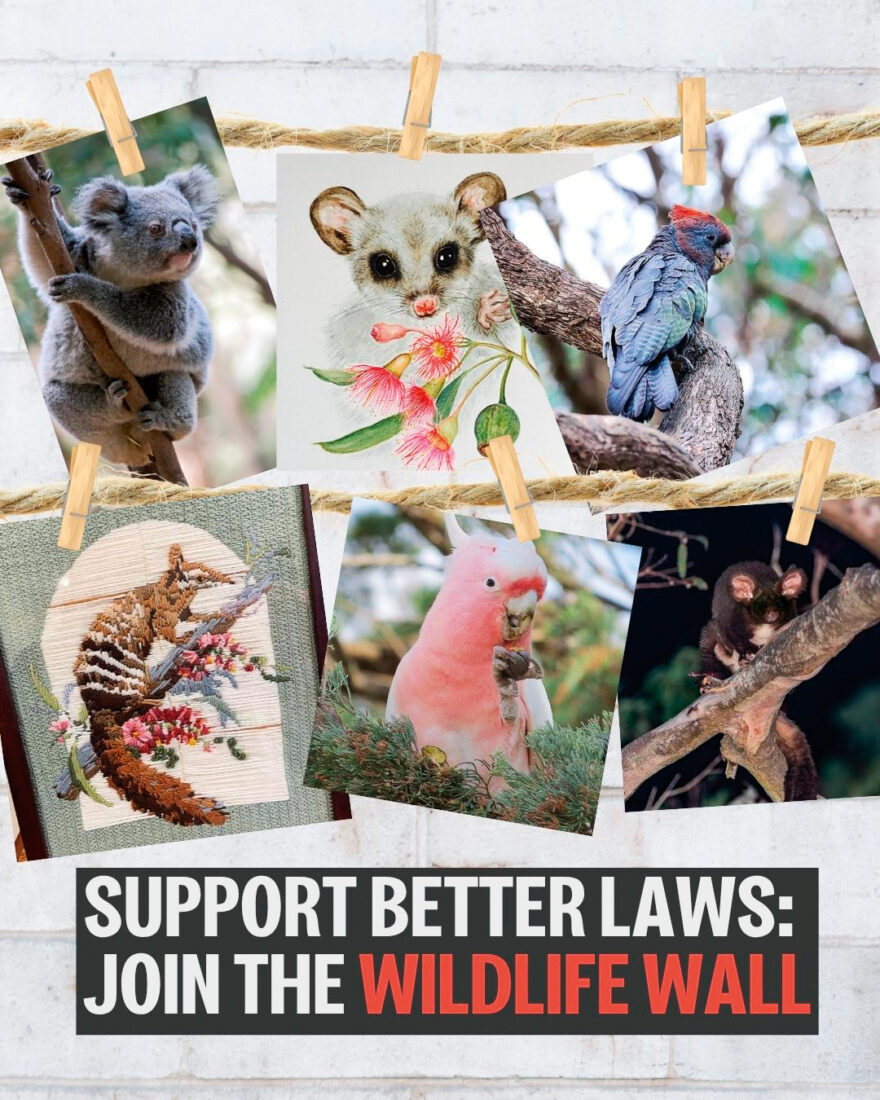
Australia’s federal environment laws are about to be rewritten—this moment will shape how nature is protected for decades. Environmental Justice Australia’s new Wildlife Wall initiative is bringing people together to remind parliament that Australians expect strong laws that actually protect the places, plants and animals we love. Upload a photo or artwork of your favourite threatened species and a short message about why it matters to you. These will be delivered to key decision-makers as the reforms are debated.
“We must seize this chance,” says EJA’s co-CEO, Nicola Rivers, “to create good laws that ensure healthy forests, clean air and climate stability. No more tepid fixes—we need enforceable protections now.”
Support the call for strong national standards, an end to deforestation and climate damage, and an independent watchdog to enforce the laws! Go to envirojustice.org.au/wildlifewall to get involved.
Environmental Justice Australia
NEST GUARDIANS
Gureng Gureng country
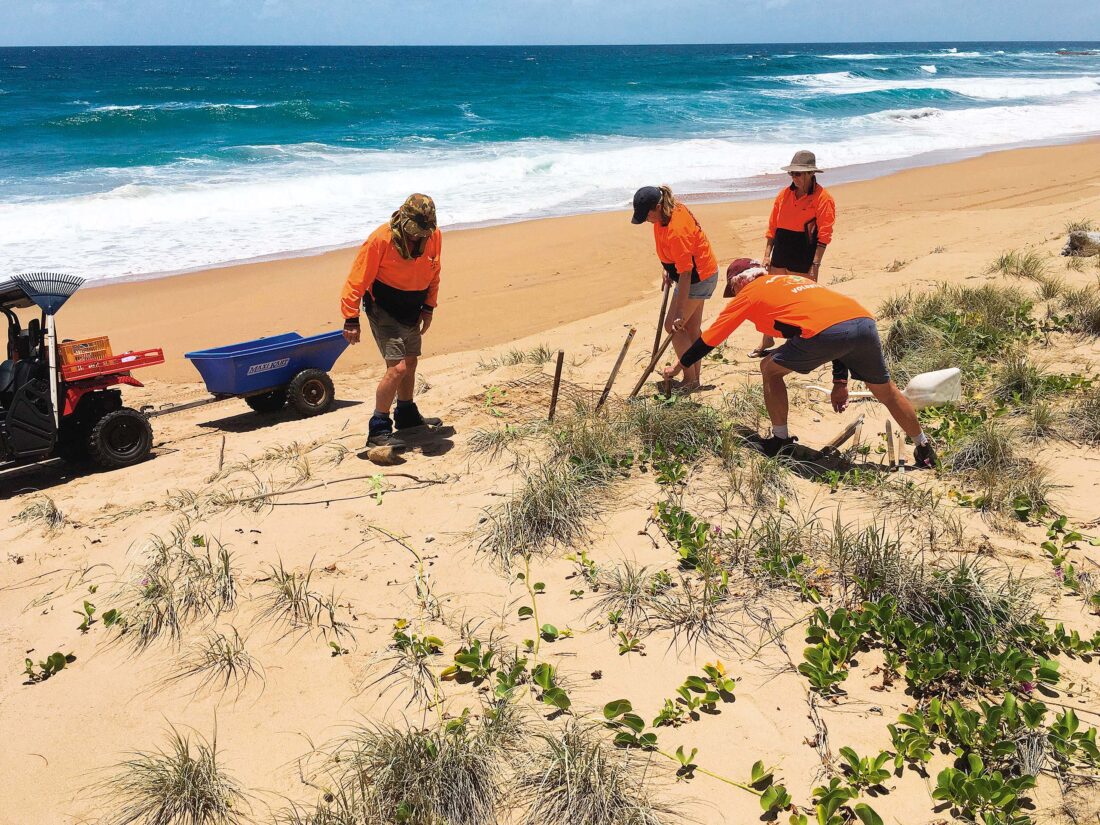
In October and November every year, just south of Queensland’s Agnes Waters, the remote sands of Wreck Rock come alive as loggerhead turtles return to nest. Volunteers spend all night patrolling the 22km beach, tagging adult turtles, monitoring their nesting and the hatching of newborn turtles, and trying to keep the ever-increasing number of foxes and goannas from destroying the nests during the eight-week incubation period. A special feature of this beach is that four species of turtle have been recorded nesting here, quite a rarity. Loggerheads, greens and flatbacks frequent this area and other locations along the Queensland coast and Barrier Reef Islands. But Wreck Rock is the only significant nesting site in Australia where the huge, rare leatherback turtle has been recorded in any significant numbers. Certified volunteers can join the conservation efforts, while donations help fund essential equipment and research. To get involved, go to turtlecare.org.au
BEV MCLACHLAN
Turtle Care Volunteers Queensland Inc
STRONGER PROTECTIONS FOR THREATENED SPECIES
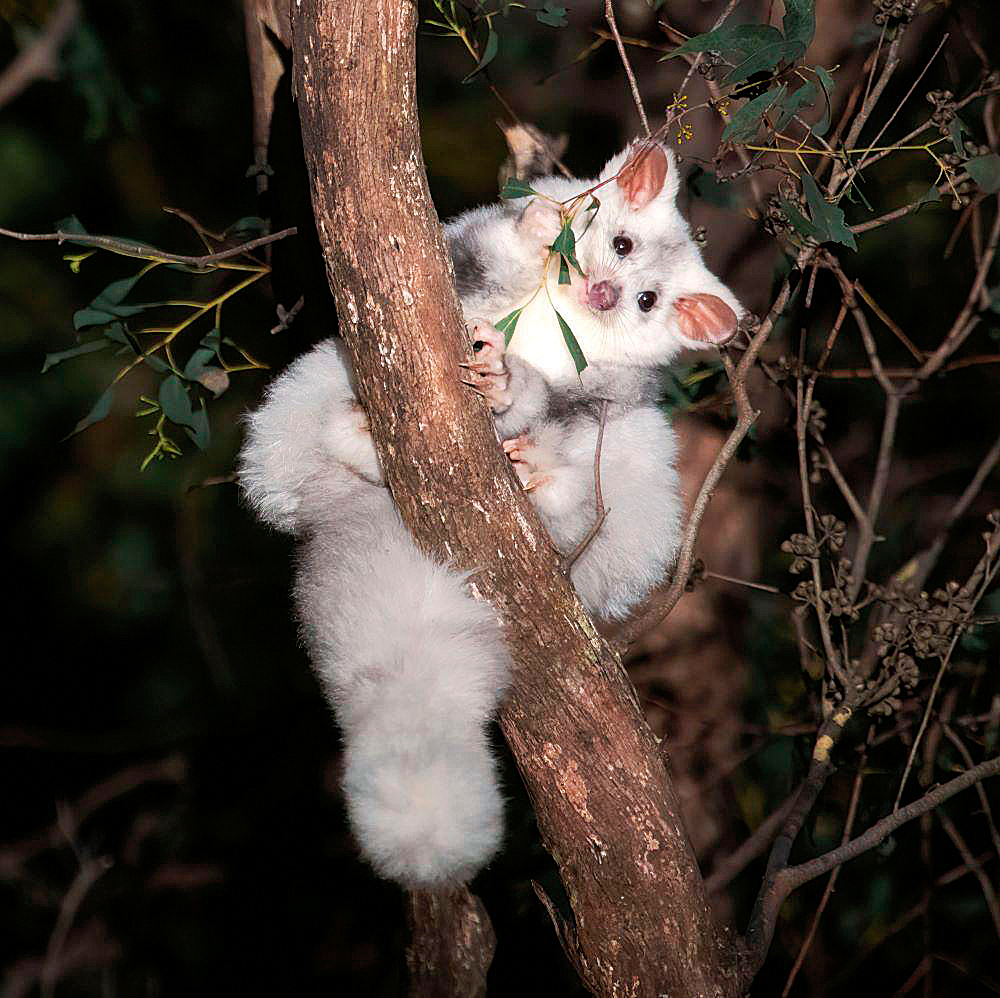
When the Federal Court recently ruled in favour of the Wilderness Society, it marked a significant step for nature. The Environment Minister Murray Watt conceded he had failed to make mandatory recovery plans for key threatened species—including the ghost bat, greater glider and red goshawk—and agreed to court orders to fix the breach by July 2026. This matters. Without recovery plans, many species are left to quietly slip toward extinction—no strategy, no safety net. This outcome confirms governments can be held to account when they fail to uphold their legal duties to nature. Every species has a name, a story, and a home—and deserves more than to become a forgotten file on a minister’s desk.
To find out more, go to: wilderness.org.au/savewildlife
RHIANNON CUNNINGHAM
The Wilderness Society
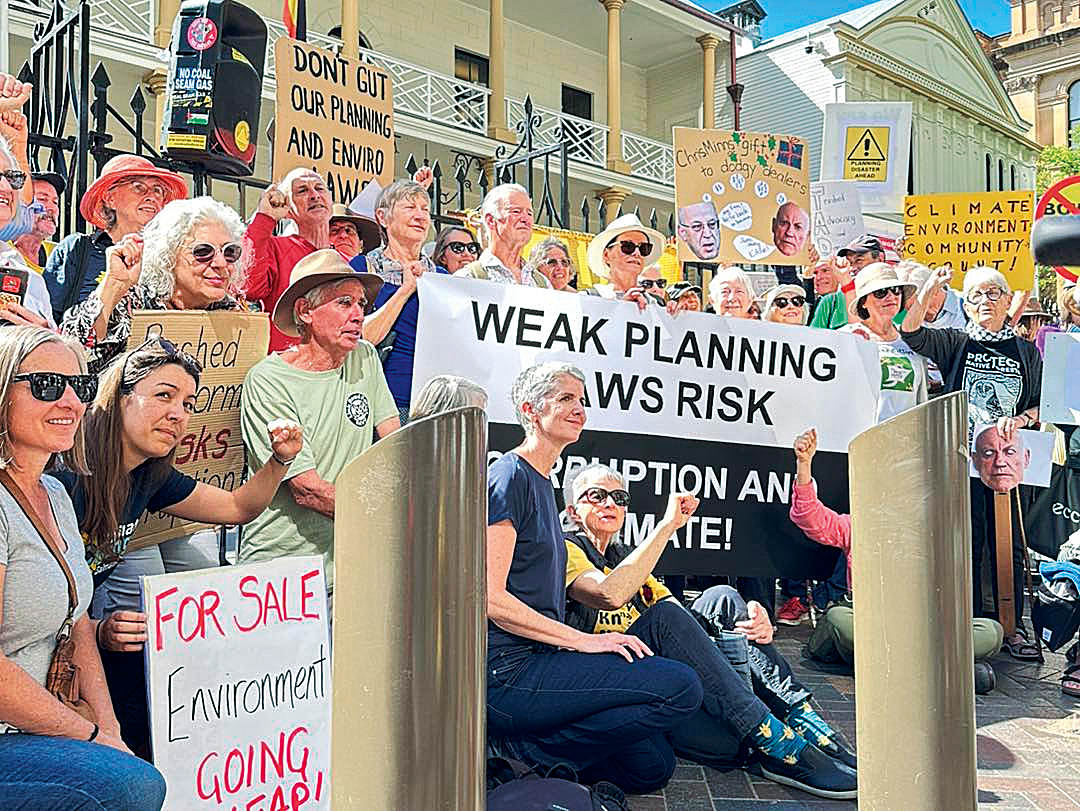
PLANNING LAWS UNDER PRESSURE
In October, new planning laws proposed by NSW Labor threatened to overturn environmental-protection safeguards that would have applied to all development statewide. NSW Premier Chris Minns marketed the Environmental Planning and Assessment Amendment Bill 2025 as a reform to address the housing crisis. Only after the Environmental Defenders Office—along with other NGOs, such as Lock the Gate Alliance, the Nature Conservation Council, and the Total Environment Centre—raised red flags, did the government move its own amendment to exclude mining and other fossil-fuel projects.
The power of environmental advocacy to prevent environmental protections being wound back remains uncertain. The proposed changes brought to bear important media pressure, but the Environmental Defenders Office has stated that, although the risk posed by the legislation is now reduced, environmental considerations have still been weakened, and the risk of potential corruption remains.
To read the EDO’s assessment of the changes, go to: tinyurl.com/edo-2025-nsw-planning-update. You can also read parliamentary proceedings about this in Hansard: tinyurl.com/Environmental-Planning
CATHERINE REYNOLDS
If you liked this piece, you should subscribe to the print mag. Only a fraction of the great stories we run in the mag make it to our website; if you want to read them, head to subscribe.wild.com.au.